

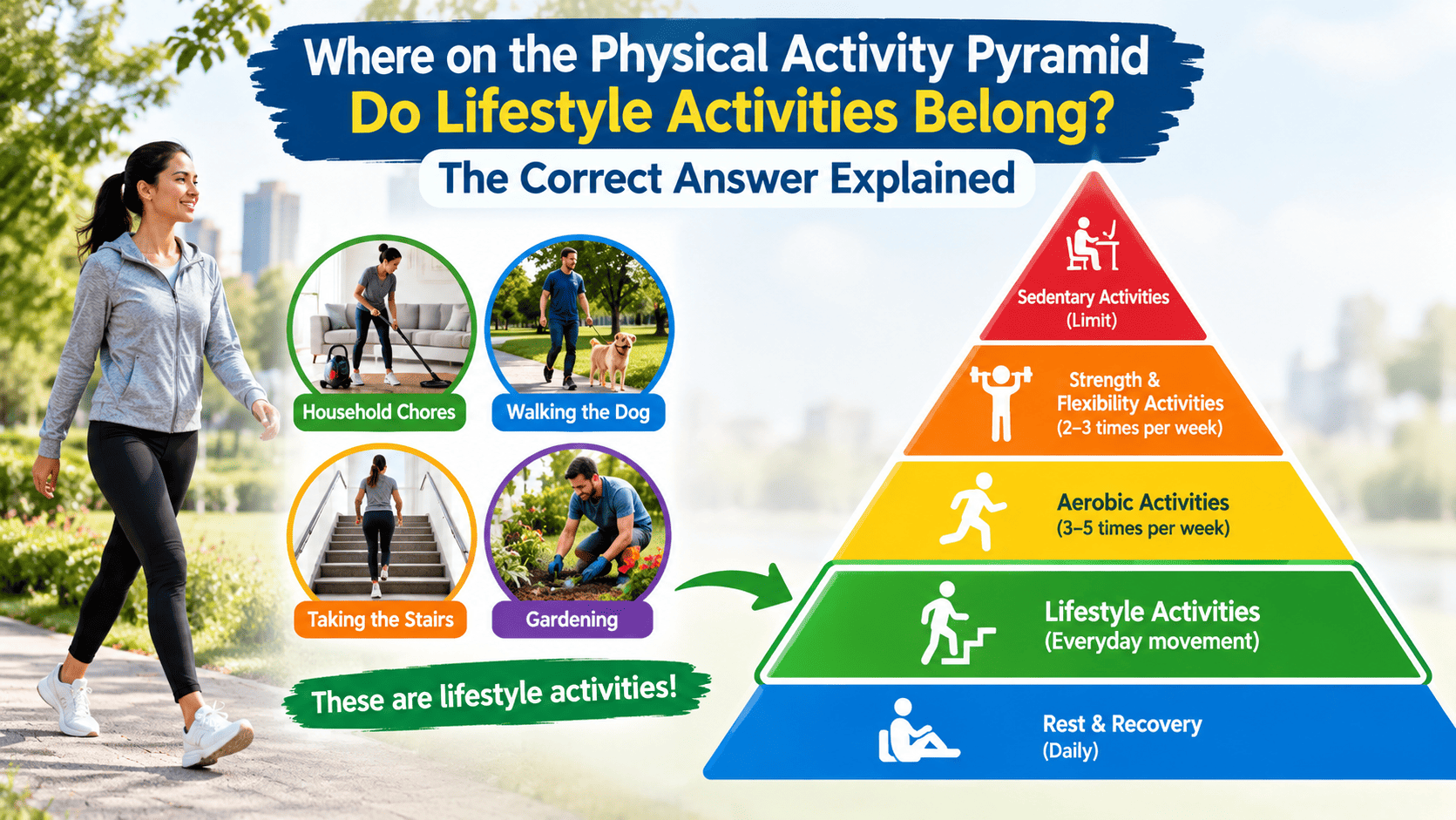
Lifestyle activities belong at the base, or bottom level, of the physical activity pyramid in many commonly used versions. This level emphasizes everyday movements such as walking, climbing stairs, gardening, doing household chores, and walking a pet. These activities help people reduce sedentary time and build movement into their daily routines. However, pyramid designs can vary by age group and educational model, so the specific diagram matters.
Introduction
Physical activity is an essential part of a healthy lifestyle, but staying active does not always require a gym membership, expensive equipment, or a strict workout schedule. Everyday movements can also contribute to a person’s overall activity level. Walking to school, taking the stairs, cleaning the house, and working in the garden are common examples.
One useful educational tool for understanding different forms of movement is the physical activity pyramid. Similar to other health education pyramids, it organizes activities into levels to help people understand which movements should be performed frequently and which sedentary behaviors should be limited.
A common question among students and health education learners is: Where on the physical activity pyramid do lifestyle activities belong?
The answer is the bottom level, or base, in many standard versions of the pyramid. This placement highlights the importance of making movement a regular part of everyday life rather than relying exclusively on scheduled exercise.
What Is the Physical Activity Pyramid?
The physical activity pyramid is a visual guide that organizes different types of physical movement according to their frequency, purpose, and role in a balanced lifestyle.
It helps people understand that physical fitness involves more than occasional intense workouts. Regular daily movement, aerobic exercise, muscle-strengthening activities, flexibility work, and adequate rest can all play important roles in an overall activity routine.
Although the exact number of levels and their labels vary between educational models, a commonly used pyramid includes the following categories:
- Base: Everyday lifestyle activities that can be incorporated into daily routines.
- Middle levels: Aerobic exercise, active recreation, sports, and other planned activities.
- Upper activity levels: Muscle-strengthening and flexibility exercises, depending on the model.
- Top: Sedentary activities that should generally be limited, such as prolonged recreational sitting.
Not every physical activity pyramid uses precisely this arrangement. Some models place strength and flexibility exercises at the same level, while others separate aerobic exercise from recreational sports. The central idea is to encourage regular movement and a balanced range of activities.
Where on the Physical Activity Pyramid Do Lifestyle Activities Belong?
Lifestyle activities generally belong at the base of the physical activity pyramid.
The base represents everyday movement that people can perform frequently as part of their normal routines. These activities are often practical, accessible, and easier to maintain than a schedule built entirely around formal exercise sessions.
For example, a person can walk to a nearby destination instead of driving, take the stairs rather than the elevator, or complete household chores that involve continuous movement. A student might walk between classes, participate in active play, or walk a family pet.
These small choices can add movement throughout the day. When performed regularly, they can contribute to a more active lifestyle and help reduce the amount of time spent sitting.
The base is especially important because it emphasizes consistency. Rather than viewing physical activity as something that happens only during a workout, the pyramid encourages people to recognize everyday opportunities to move.
Important: If you are answering a school quiz, check the specific pyramid used in your textbook or classroom. The base is the usual answer in many traditional models, but diagrams can differ.
Examples of Lifestyle Activities at the Base of the Pyramid
Lifestyle activities are ordinary movements that can be incorporated into daily living. They do not always require a special location, sports equipment, or a planned training session.
1. Walking
Walking is one of the simplest ways to increase daily movement. People can walk to nearby shops, take a short walk during a break, or choose to walk for short journeys when practical.
Brisk walking can also count as moderate-intensity aerobic activity when it increases breathing and heart rate.
2. Climbing Stairs
Taking the stairs instead of an elevator is another example of lifestyle activity. Stair climbing engages the muscles of the legs and requires more effort than walking on level ground.
People can incorporate it into their routines at school, work, or home when stairs are accessible and safe to use.
3. Household Chores
Cleaning, sweeping, vacuuming, washing floors, and tidying rooms involve bodily movement. Depending on the task and how vigorously it is performed, household chores can contribute to light, moderate, or occasionally higher-intensity physical activity.
4. Gardening and Yard Work
Planting flowers, watering plants, raking leaves, and performing other gardening tasks encourage movement. More demanding gardening activities can also involve muscular effort.
These tasks offer a practical way to combine routine responsibilities with physical activity.
5. Walking a Pet
Taking a dog for a walk creates an opportunity for regular movement and outdoor time. The amount of activity depends on the walking pace, duration, and frequency.
6. Active Transportation
Walking or cycling to school, work, or nearby destinations can make physical activity part of a normal daily schedule. Safe routes, suitable weather, and local conditions should be considered when choosing these options.
7. Active Play
Children and teenagers can increase daily movement through playground activities, outdoor games, walking during breaks, and other forms of active play. These activities can support the development of healthy movement habits.
Together, these examples show why lifestyle activities are commonly represented at the foundation of the physical activity pyramid.
Why Are Lifestyle Activities Placed at the Bottom?
The base of a pyramid represents a foundation. In the context of physical activity, lifestyle movements provide a practical starting point for building a more active routine.
They Encourage Daily Movement
Unlike scheduled workouts, many lifestyle activities can occur naturally throughout the day. People do not need to set aside a separate exercise session every time they choose to walk, climb stairs, or complete an active household task.
They Help Reduce Sedentary Time
Long periods of sitting can contribute to an inactive lifestyle. Walking around, standing up to perform a task, and taking movement breaks create opportunities to interrupt extended periods of sitting.
They Are Accessible to Many People
Walking, light household chores, and simple movement breaks often require little or no equipment. People can adapt activities to their environment, abilities, and schedules.
They Support Long-Term Habits
Small, repeatable choices can be easier to maintain than a demanding routine that is difficult to fit into everyday life. Building movement into familiar activities may help people remain more consistent.
They Contribute to Overall Health
Regular physical activity is associated with benefits for cardiovascular health, muscular function, weight management, mental well-being, and the prevention and management of several chronic diseases. The amount and intensity of activity matter, so lifestyle movement should be considered part of a broader approach to health.
Lifestyle Activities vs. Structured Exercise
Lifestyle activities and structured exercise both contribute to physical activity, but they are not exactly the same.
| Feature | Lifestyle activities | Structured exercise |
| Main purpose | Incorporate movement into everyday life | Improve or maintain specific fitness goals |
| Examples | Walking for errands, gardening, taking stairs | Planned jogging, cycling workouts, gym sessions |
| Scheduling | Often part of normal routines | Usually planned in advance |
| Equipment | Often unnecessary | May or may not require equipment |
| Frequency | Can occur throughout the day | Depends on the exercise program |
The distinction is not absolute. Walking can be a lifestyle activity when used for transportation or a structured exercise session when planned for a specific duration and intensity.
Similarly, gardening may involve light movement or substantial physical effort. The activity’s intensity depends on the person and how the task is performed.
The important lesson is that everyday movement and planned exercise can complement each other.
How Much Physical Activity Do People Need?
Although lifestyle activities belong at the base of many physical activity pyramids, the pyramid itself should not be treated as a complete prescription for every person’s exercise needs.
The World Health Organization recommends that adults aged 18–64 accumulate at least 150–300 minutes of moderate-intensity aerobic activity per week, or 75–150 minutes of vigorous-intensity aerobic activity, or an equivalent combination. Adults should also perform muscle-strengthening activities involving the major muscle groups on at least two days per week.
For children and adolescents aged 5–17, the WHO recommends an average of at least 60 minutes per day of moderate-to-vigorous physical activity across the week, mostly aerobic, with vigorous and muscle- and bone-strengthening activities included on at least three days per week.
These recommendations differ by age and individual circumstances. People with disabilities, chronic conditions, or specific exercise restrictions may need suitable adaptations.
Everyday movement can contribute to meeting activity recommendations, particularly when it reaches the appropriate intensity and duration. However, a few light household tasks should not automatically be counted as equivalent to moderate or vigorous exercise.
How to Add More Lifestyle Activities to Your Day
Increasing daily movement does not have to involve changing your entire schedule. Simple adjustments can create more opportunities to be active.
- Walk during short journeys: When the destination is nearby and the route is safe, consider walking instead of using a vehicle.
- Take movement breaks: Stand up and move around periodically during long periods of studying or working.
- Use the stairs when appropriate: Choose stairs instead of an elevator when doing so is safe and manageable.
- Make chores active: Sweep, tidy, garden, or complete other household tasks that involve movement.
- Plan active social time: Meet a friend for a walk or participate in a recreational activity together.
- Choose enjoyable activities: Walking, dancing, cycling, gardening, and active games can make movement feel less like an obligation.
- Build up gradually: If you have been inactive, begin with manageable amounts and increase your activity over time.
The goal is to make regular movement a realistic part of everyday life. People should choose activities that suit their abilities, circumstances, and preferences.
Common Misconceptions About Lifestyle Activities
Myth 1: Only Gym Workouts Count as Physical Activity
This is incorrect. Walking, active transportation, gardening, dancing, and household chores all involve physical movement. Depending on their intensity, they can contribute to overall activity levels.
Myth 2: Lifestyle Activities Are Always Easy
Not necessarily. Sweeping may be light activity for one person, while demanding yard work can require considerable effort. Intensity varies with the task and the individual’s fitness.
Myth 3: Lifestyle Activities Replace Every Other Type of Exercise
Everyday movement is valuable, but it does not necessarily provide all the benefits of aerobic training, muscle strengthening, and flexibility work. A balanced routine can include several types of activity.
Myth 4: The Physical Activity Pyramid Is Identical in Every Textbook
Different educational models arrange and label activities differently. Although lifestyle activities commonly appear at the base, learners should consult the diagram associated with their particular course or question.
Frequently Asked Questions
Where on the physical activity pyramid do lifestyle activities belong?
Lifestyle activities generally belong at the bottom, or base, of the physical activity pyramid in many commonly used models.
What are three examples of lifestyle activities?
Walking, climbing stairs, and gardening are three common examples. Household cleaning and walking a pet are other options.
Why are lifestyle activities at the base of the pyramid?
They encourage frequent everyday movement and provide a practical foundation for an active lifestyle.
Are lifestyle activities the same as aerobic exercise?
Not always. Some lifestyle activities, such as brisk walking, can be aerobic exercise. Others may be light-intensity movements that do not raise the heart rate enough to count as moderate-intensity aerobic activity.
Do lifestyle activities count toward weekly exercise recommendations?
They can count when their intensity and duration meet the relevant activity criteria. The amount of movement matters, and light activity is not automatically equivalent to moderate or vigorous exercise.
What does the top of the physical activity pyramid represent?
In many traditional versions, the top represents sedentary behaviors, such as prolonged recreational screen time, that should be limited. The precise arrangement depends on the model.
Conclusion
Lifestyle activities belong at the base of the physical activity pyramid in many traditional models because they encourage regular movement as part of everyday life. Walking, taking the stairs, gardening, household chores, active transportation, and walking a pet are practical examples.
These activities can help people reduce sedentary time, develop healthier routines, and contribute to their overall physical activity. However, everyday movement works best as part of a balanced approach that also considers aerobic exercise, muscle strengthening, flexibility, and individual needs.
The main takeaway is simple: physical activity is not limited to the gym. Everyday choices can make movement a more natural and sustainable part of a healthy lifestyle.