

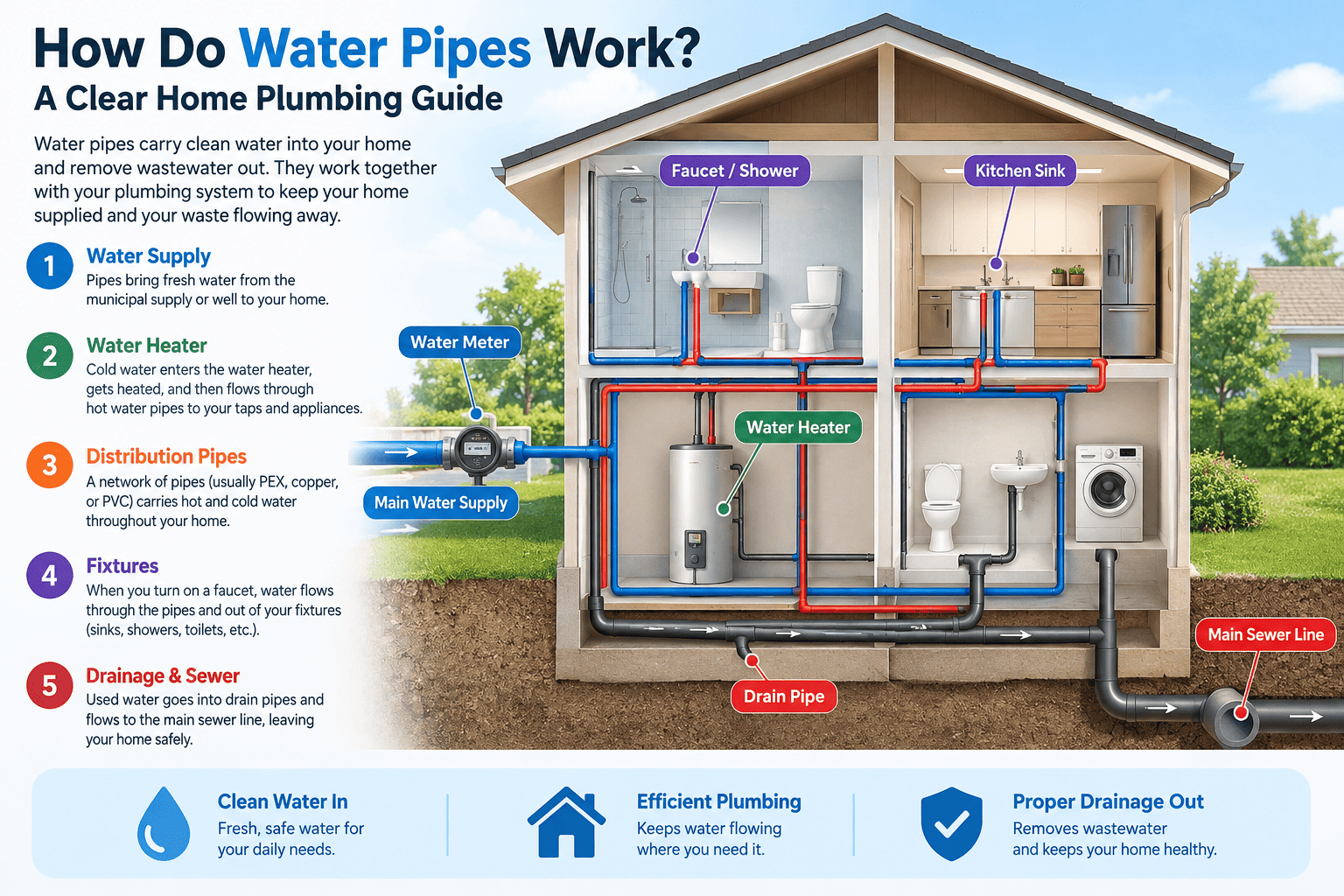
Water pipes work by carrying clean water into a building under pressure and transporting wastewater away through a separate drainage system. Municipal water mains, pumps, storage tanks, valves, and household supply pipes help deliver water to taps, showers, and appliances. Drainpipes usually rely on gravity, while vent pipes balance air pressure and help prevent unpleasant sewer gases from entering the home.
Introduction: Understanding the Plumbing System
Water pipes are essential to everyday life, delivering water for drinking, cooking, bathing, cleaning, and washing. Although a tap may appear to work with a simple turn of its handle, an interconnected network of pipes, valves, fittings, and pressure controls operates behind the scenes. Understanding this network helps homeowners recognize plumbing problems, conserve water, and make better decisions about repairs and maintenance.
A typical home plumbing system has two main functions: supplying fresh water and removing wastewater. These functions require different pipe arrangements because incoming water generally travels under pressure, whereas wastewater flows primarily through gravity-fed drains. Vent pipes provide another important function by balancing air pressure in the drainage network. The US Environmental Protection Agency explains that public drinking-water distribution systems use pipes, storage facilities, valves, and pumps to deliver water to consumers.
How Do Water Pipes Work Inside a House?
The process begins when water enters a property through a service pipe connected to a public water main or a private supply, such as a well or storage tank. In municipal systems, water pressure pushes water through the service connection and into the building. A main shutoff valve allows the supply to be stopped during emergencies or plumbing repairs. Depending on the property, a water meter, pressure regulator, filter, or additional treatment equipment may also be installed.
Once water enters the building, supply pipes distribute it to individual fixtures and appliances. Branch pipes connect the main supply to kitchen sinks, bathroom taps, showers, toilets, washing machines, and water heaters. Opening a tap creates a path for pressurized water to flow out. Closing it stops that flow. The pipe network must be appropriately sized so several fixtures can operate without excessive pressure loss, although simultaneous use may reduce the flow available at each outlet.
The Role of Water Pressure and Flow
Water pressure is the force that pushes water through the plumbing network, while flow rate describes how much water passes through a pipe over a given period. Both affect everyday performance. A shower may produce a weak stream if pressure is insufficient, the pipe is restricted, or several fixtures are drawing water simultaneously. A properly designed supply system balances pipe diameter, length, fittings, elevation, and expected demand.
Pressure does not remain identical throughout a plumbing system. Friction against pipe walls and resistance from bends, valves, and fittings reduce pressure as water moves. Elevation matters too: water must overcome gravity when travelling upward to higher floors. Pumps or elevated storage tanks can help maintain adequate pressure in suitable systems. The EPA identifies pressure management as important for reliable distribution, water quality, and reducing leaks or pipe breaks.
The Main Types of Plumbing Pipes
Different pipes serve different purposes, and their materials affect durability, cost, installation, and maintenance. Modern buildings may use copper, cross-linked polyethylene (PEX), PVC, CPVC, or other approved materials. The appropriate choice depends on whether the pipe carries hot water, cold drinking water, wastewater, or another type of fluid. Local plumbing regulations and manufacturer specifications should always guide material selection.
| Pipe material | Common applications | Important consideration |
| Copper | Hot and cold water supply | Durable, but installation can cost more |
| PEX | Hot and cold water supply | Flexible and convenient for many installations |
| PVC | Many drainage and cold-water applications, where approved | Not suitable for every temperature or use |
| CPVC | Hot and cold water supply, where approved | Temperature and fitting compatibility matter |
| Cast iron | Some building drainage systems | Heavy, durable, and often used for noise control |
Pipe material alone does not guarantee safe drinking water. Pipes, fittings, seals, and joining materials must all be suitable for their intended use. Older plumbing may contain deteriorating components or materials that require professional assessment. When replacing a pipe, confirm its approval for drinking water and its compatibility with the existing system rather than choosing solely on price.
How Clean Water Reaches Your Tap
In a public water system, treated water travels through large distribution mains and smaller service connections before reaching individual properties. Pumps, storage reservoirs, and elevated tanks help maintain the supply, depending on the local network design. Inside a building, the main supply divides into smaller lines that feed each fixture. When a tap opens, the pressure difference between the supply and the outlet drives water through the connected pipework.
Some properties have additional arrangements. A building may use a roof tank, underground cistern, booster pump, or private well where municipal service is unavailable or intermittent. In these systems, water may be pumped into storage and then delivered through gravity or another pump. Tanks and pumps require suitable installation, maintenance, and protection against contamination. The precise setup depends on local water availability, building height, pressure conditions, and applicable plumbing requirements.
How Drainpipes Remove Wastewater
After water has been used, it enters the drainage system through a sink outlet, shower drain, toilet, or appliance connection. Unlike pressurized supply pipes, household drainpipes generally depend on gravity and carefully planned slopes. Wastewater travels through smaller fixture drains into larger branch drains and eventually into the building drain. From there, it may connect to a municipal sewer or an approved on-site wastewater treatment system.
Drainage pipes must be sized and installed correctly to carry waste without repeated blockages or unwanted standing water. Toilets, kitchen sinks, and showers can introduce different materials into the network, so unsuitable objects, grease, and excessive debris should not be flushed or washed down drains. A blockage can slow drainage, cause wastewater to back up, or produce unpleasant smells. Persistent backups, especially those affecting several fixtures, can indicate a problem in a shared drain or sewer connection.
Why Plumbing Systems Need Vent Pipes
Drainage systems need air as well as pipes for wastewater. When a large volume of water moves through a drain, it can create pressure changes that interfere with the flow from nearby fixtures. Vent pipes allow air to enter or leave the drainage network, helping stabilize pressure and protect the water seal inside plumbing traps. Many vent pipes connect to the outside air through the roof, although approved alternative arrangements may be permitted by local codes.
A plumbing trap is the curved section of pipe beneath many sinks and other fixtures. It retains a small amount of water, creating a barrier that helps stop sewer gases from entering indoor spaces. If the trap dries out, leaks, or loses its water seal because of pressure problems, unpleasant odors may appear. Proper venting helps protect this seal. The International Plumbing Code specifically addresses vent arrangements and their role in preventing trap-seal loss and unwanted odors.
How Hot Water Pipes Work
Hot water systems use a water heater to raise the temperature of incoming cold water. Depending on the property, the heater may be a storage tank, an instantaneous unit, or another approved heating system. Hot water then travels through dedicated supply pipes to showers, taps, and appliances. In a tank-based system, heated water is stored until needed, while a tankless system heats water as it passes through the appliance.
Insulation around hot water pipes can reduce heat loss and help water remain warmer as it travels to the fixture. Long pipe runs may cause delays before hot water arrives, wasting some water while the user waits. A properly designed recirculation system can reduce waiting times in suitable buildings, but it adds equipment and may consume energy. Temperature settings, pressure control, and safety devices should follow the heater manufacturer’s instructions and local requirements.
Common Water Pipe Problems and Their Causes
Plumbing problems often develop gradually. A small leak beneath a sink may go unnoticed until it damages cabinets, flooring, or nearby walls. Low water pressure can result from a partially closed valve, clogged fixture aerator, mineral buildup, a leaking pipe, or a supply-side problem. Repeated drain blockages may point to accumulated grease, hair, unsuitable materials, damaged piping, or tree roots entering an underground sewer line.
Watch for these warning signs:
- Damp patches or unexplained water bills: possible hidden leaks.
- Banging pipes: pressure changes or unsecured pipework may be responsible.
- Slow drains: possible buildup or obstruction.
- Rust-colored water: possible corrosion or disturbance in the supply network.
- Persistent sewer odors: a dry trap, venting issue, or drainage defect may be involved.
These symptoms are clues rather than definitive diagnoses. For example, discolored water may originate in the public main rather than the home’s own plumbing. If several fixtures suddenly lose pressure, check whether the problem affects neighboring properties and contact the water supplier when appropriate. Significant leaks, sewage backups, and suspected contamination require prompt attention.
Practical Maintenance Tips for Longer-Lasting Pipes
Routine inspection can help prevent expensive repairs. Check accessible pipes beneath sinks, around water heaters, near washing machines, and in basements or utility areas. Look for moisture, corrosion, loose connections, damaged insulation, or changes in water pressure. Keep the main shutoff valve accessible and make sure household members know where it is located. If a pipe bursts, shutting off the supply promptly can limit water damage.
Avoid pouring cooking grease into kitchen drains, and use drain strainers where hair or food scraps commonly accumulate. Do not rely on chemical drain cleaners as a routine solution, because some products can damage particular materials or create hazards during subsequent repairs. Arrange professional inspections when plumbing is old, repeatedly leaking, or showing signs of corrosion. In areas with intermittent water supply, tanks should also be properly covered, maintained, and protected against contamination.
How to Improve Water Efficiency at Home
Efficient plumbing reduces unnecessary water use without sacrificing normal household comfort. Leaking taps, faulty toilet mechanisms, and dripping connections can waste water continuously. Repairing these faults is often a practical first step. Water-efficient showerheads, suitable tap aerators, and efficient appliances can also reduce consumption. However, choose fittings that provide adequate performance for your household and remain compatible with the existing plumbing system.
Hot water efficiency matters too. Insulating suitable hot water pipes can reduce heat loss, while repairing leaks prevents wasted water and the energy used to heat it. Avoid leaving taps running unnecessarily, and consider monitoring your water meter to identify unusual consumption. If water use increases unexpectedly, check visible fixtures and appliances before arranging a professional leak investigation. Water conservation is most effective when sensible habits are combined with well-maintained equipment.
Conclusion: Understanding Your Home’s Water Pipes
A household plumbing network combines pressurized supply lines, drainage pipes, vents, valves, fittings, and heating equipment to deliver water and remove wastewater safely. Understanding the difference between water pressure, flow rate, gravity drainage, and venting makes it easier to recognize problems before they become expensive. Regular inspections, appropriate pipe materials, prompt leak repairs, and professional installation all contribute to a dependable system. For major repairs or suspected water-quality problems, consult a qualified plumber or your local water supplier.
Frequently Asked Questions (FAQs)
1. How do water pipes work in a typical home?
They deliver clean water through pressurized supply lines and carry used water away through gravity-based drainage pipes. Vent pipes help regulate air pressure and protect plumbing traps.
2. Why does water pressure decrease when multiple taps are open?
Several fixtures draw water from the same supply network, increasing flow demand and friction losses. Undersized pipes, restricted valves, or an inadequate supply can make the pressure drop more noticeable.
3. How long do household water pipes last?
Lifespan varies by material, water chemistry, installation quality, and maintenance. Copper and plastic pipes can last for decades under suitable conditions, but age alone cannot determine whether a pipe is safe or needs replacement.
4. Can water pipes freeze and burst?
Yes. In freezing conditions, water can expand as it turns to ice, increasing pressure inside a pipe until it cracks or bursts. Insulating exposed pipes, sealing cold-air gaps, and protecting vulnerable plumbing can reduce the risk.
[…] stationery or wants a more presentable gift may consider the decorative finish worthwhile. Comparing the price, refill compatibility, packaging, and personal design preferences can help determine whether the […]