

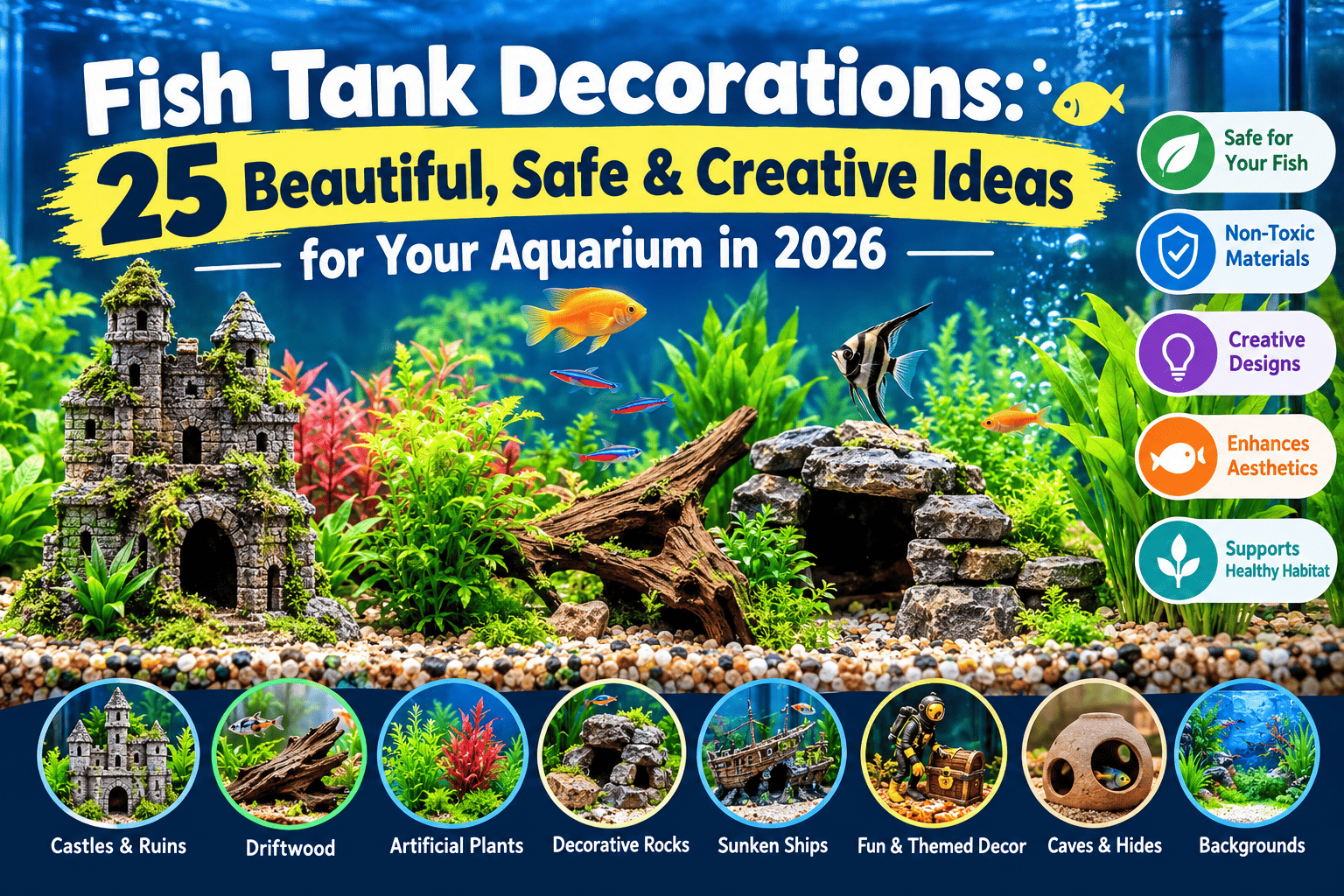
A well-decorated aquarium can turn an ordinary fish tank into an attractive underwater environment. The right fish tank decorations are not only about making the aquarium look beautiful; they can also give fish places to hide, explore, rest and establish their own territories. The key is to create a setup that looks good while still leaving enough room for natural swimming and choosing materials that are safe for aquatic life.
In 2026, aquarium owners have more decorating options than ever, from natural driftwood and live plants to aquarium-safe caves, rocks, themed ornaments and minimalist aquascapes. However, decoration should always be selected according to the fish species, tank size and water conditions rather than appearance alone.
Why Are Fish Tank Decorations Important?
Decorations can make an aquarium more visually interesting, but their value goes beyond appearance. Many fish naturally seek cover, explore structures and use plants or caves as shelter. Providing these features can make an aquarium feel more secure and encourage more natural behavior. The RSPCA also recommends providing covered areas because fish can feel less exposed and stressed when they have places to retreat.
Decorations can also help divide a tank into different areas. Rocks, plants, driftwood and caves can create territories and hiding places, which may be particularly useful for shy or territorial species. At the same time, decorations should not completely fill the aquarium because fish still need open swimming space.
25 Beautiful Fish Tank Decoration Ideas
1. Live Aquatic Plants
Live plants are one of the most natural ways to decorate an aquarium. They add color, texture and movement while creating a more natural-looking environment. Some aquatic plants can also absorb nutrients from the water, making them useful additions when properly maintained.
Choose plants according to your fish, lighting and maintenance level. Beginners can start with hardy varieties before moving toward more demanding planted-tank designs.
2. Aquarium Driftwood
Driftwood can become the centerpiece of a natural aquarium. Its unusual shapes create visual depth while giving fish areas to explore and hide.
Aquarium-specific driftwood should be prepared correctly before being placed in the tank. Some types can release tannins, which may give the water a tea-colored appearance and can influence water chemistry.
3. Natural Rock Formations
Rocks can create impressive landscapes without requiring complicated equipment. Arrange several pieces at different heights to create caves, pathways and visual layers.
Make sure rocks are suitable for aquarium use and do not have sharp edges that could injure fish. Certain rocks can also affect pH and hardness, so their chemistry should match the requirements of the aquarium.
4. Aquarium Caves
Caves are excellent decorations for fish that prefer sheltered spaces. A simple ceramic or aquarium-safe resin cave can become a favorite hiding area.
Always check the size of the entrance. Fish should be able to enter and exit comfortably without becoming trapped.
5. Artificial Plants
Artificial plants are a practical alternative for aquarium owners who want greenery without the maintenance associated with live plants.
Choose plants specifically designed for aquariums and inspect them for rough or sharp edges. Soft artificial plants can be particularly useful for fish with delicate fins.
6. Ceramic Hides
Plain aquarium-safe ceramic structures can provide shelter while maintaining a clean and simple appearance. Their neutral colors work particularly well in minimalist aquarium designs.
7. Themed Shipwrecks
A sunken ship can transform a basic aquarium into an underwater adventure scene. It works especially well as a centerpiece surrounded by plants, rocks and smaller ornaments.
Make sure the ornament is manufactured for aquarium use rather than using a decorative object designed for another purpose.
8. Castle Decorations
Castles remain a popular choice for themed aquariums. They can provide visual interest as well as hiding areas for smaller fish.
For a more natural appearance, combine a castle with plants and rocks instead of filling the entire tank with artificial ornaments.
9. Coconut-Shell Caves
A properly prepared coconut-shell cave can create a natural-looking shelter. It can work particularly well in aquariums designed around a tropical or rainforest theme.
Use aquarium-prepared materials and make sure there are no sharp surfaces or unsafe coatings.
10. Moss-Covered Decorations
Aquarium moss can be attached to suitable rocks, wood or other aquarium-safe structures. Over time, it can create a soft, natural appearance.
This style works especially well for aquascaping because the decoration gradually becomes part of the living landscape.
11. Floating Plants
Floating plants create a different layer of decoration at the surface. They can provide shade and make the aquarium feel more natural.
However, do not allow floating plants to completely cover the surface because fish and the aquarium itself still need appropriate gas exchange and lighting.
12. Slate Features
Flat aquarium-safe slate can be used to create terraces, caves and layered rock structures. Its dark appearance can also provide a strong contrast against green plants.
Always check pieces carefully for sharp edges before using them.
13. Backgrounds
A background is one of the easiest ways to change the appearance of a fish tank without taking up swimming space.
Black, blue, natural-rock and planted backgrounds can make fish and plants stand out while hiding equipment and reducing visual distractions.
14. Sand and Substrate Patterns
Substrate is not traditionally considered a decoration, but it plays a major role in the overall appearance of an aquarium.
Different shades and textures can create pathways, open spaces and planted areas. Choose substrate according to the needs of your fish and plants rather than appearance alone.
15. Natural-Style Branches
Aquarium-safe branches and spiderwood-style structures can create an impressive three-dimensional landscape. Place taller pieces toward the back and lower structures toward the front to create depth.
16. Minimalist Aquarium Design
You do not need dozens of ornaments to create a beautiful aquarium. A few carefully selected rocks, one piece of driftwood and several plants can produce a clean and sophisticated appearance.
Minimalist designs are also easier to maintain because there are fewer objects to clean.
17. Jungle-Themed Aquarium
For a dense jungle effect, combine tall plants, smaller foreground plants and natural-looking wood. Leave some open swimming areas so the aquarium does not become overcrowded.
18. Desert-Themed Aquarium
A desert-inspired design can use carefully selected rocks, neutral substrate and aquarium-safe ornaments to create a dry-land illusion beneath the water.
The important point is to choose materials that are genuinely aquarium safe rather than simply using household decorations that look appropriate.
19. Colorful Themed Ornaments
Colorful aquarium ornaments can create a playful appearance, particularly in family aquariums. Fish-safe resin decorations are available in many shapes and themes.
Avoid using painted household toys or objects simply because they look attractive. Decorations should be designed and labeled for aquarium use.
20. Betta-Friendly Hides
Betta fish can benefit from plants and sheltered areas, but decorations must be especially smooth because their fins can be damaged by rough surfaces.
Silk plants, smooth caves and aquarium-safe ceramic structures are practical choices. Avoid anything with sharp edges or narrow openings.
21. Natural Biotope Style
A biotope aquarium attempts to recreate the natural environment associated with a particular type of fish. This might involve specific plants, wood, rocks and substrate.
It is one of the best approaches for aquarium owners who want decoration to serve both an aesthetic and environmental purpose.
22. Rock-and-Plant Combination
Instead of choosing between rocks and plants, combine them. Place larger rocks toward the back or sides and use plants to soften their edges.
This creates depth and prevents the aquarium from looking like a collection of separate objects.
23. Hollow Logs
Hollow aquarium-safe logs provide both decoration and shelter. They can be especially useful for fish that naturally spend time around caves, logs or enclosed spaces. Aqueon notes that several fish groups use structures such as hollow logs and caves as refuge.
24. Open Swimming Layout
One of the most overlooked decoration ideas is simply leaving enough empty space. A beautiful aquarium does not need every corner filled.
Place decorations around the sides and back while maintaining a clear central swimming area. This creates balance and makes the tank appear larger.
25. A Custom Aquascape
For the ultimate aquarium design, combine several elements into one coordinated layout. For example, you could use driftwood as the central feature, surround it with rocks, add live plants and finish the design with a dark background.
The result can look like a miniature underwater landscape rather than a tank filled with random ornaments.
How to Choose Safe Fish Tank Decorations
Safety should always come before appearance. The safest starting point is to choose decorations specifically manufactured for aquarium use. Aquarium-safe resin, ceramic, suitable rocks, driftwood and aquatic plants are commonly used options.
Avoid metal objects, painted household decorations, unknown plastics and items with coatings that were not designed for continuous contact with water. Aquarium guidance consistently emphasizes avoiding materials that may release harmful substances into the water.
You should also inspect every decoration for sharp edges, cracks, loose components and small openings. A decoration that looks harmless can become dangerous if a fish gets trapped or damages its fins against a rough surface.
Natural vs. Artificial Decorations
Both natural and artificial decorations have advantages.
Natural materials such as live plants, driftwood and suitable rocks can create a highly realistic environment. They may also interact with the aquarium’s water chemistry, so they require more consideration before use.
Artificial decorations are often easier to maintain and can provide consistent shapes and colors. Artificial plants can also provide cover without requiring plant-specific lighting or nutrients. Research cited by the RSPCA indicates that artificial plants can be effective for stress reduction, while live plants provide additional benefits such as absorbing waste products.
The best option depends on your fish, experience level and the amount of maintenance you want to perform.
How to Arrange Decorations in a Fish Tank
Start by deciding where you want the main focal point. This could be a large piece of driftwood, a rock formation or a themed ornament.
Next, create height and depth. Taller decorations generally work well toward the back, while smaller plants and ornaments can be placed toward the front. Aqueon recommends using taller plants toward the back and progressively shorter plants toward the front to create a more attractive layout.
Finally, leave open swimming areas. Decorations should enhance the aquarium rather than make it difficult for fish to move around.
How to Prepare New Aquarium Decorations
New decorations should be inspected and rinsed before entering the aquarium. Never assume that an item is ready simply because it looks clean.
For natural materials, preparation can be more involved. Driftwood may need soaking, while rocks should be cleaned and checked for suitability. Natural materials can also influence water chemistry, so monitoring your aquarium after adding them is a sensible practice.
Never clean aquarium decorations with household soap or dishwashing liquid. Residues can remain on surfaces and create serious problems for aquatic animals. Manufacturer guidance for aquarium-safe resin decorations also recommends rinsing with water rather than using soap or cleaning chemicals.
Common Fish Tank Decoration Mistakes to Avoid
One common mistake is choosing decorations based entirely on appearance. A beautiful ornament is not automatically safe for fish.
Another mistake is overcrowding the aquarium. Too many decorations can reduce swimming space and make maintenance more difficult.
Using sharp rocks or ornaments with narrow holes is another potential problem. Fish can injure themselves or become trapped as they grow.
It is also important to remember that some natural decorations can alter water chemistry. Limestone, shells and other calcium-rich materials can increase hardness and pH, while some driftwood can release tannins and influence water conditions.
Best Fish Tank Decorations for Beginners
If you are decorating your first aquarium, you do not need an expensive collection of ornaments. A simple combination of aquarium-safe plants, one or two smooth rocks, a suitable hiding place and an attractive background can be enough.
Beginners should focus on decorations that are easy to inspect, clean and maintain. Once you understand how your fish behave and how your water parameters respond to different materials, you can experiment with more advanced aquascaping techniques.
Frequently Asked Questions
What are the best fish tank decorations?
The best decorations depend on the fish species and aquarium setup. Live plants, aquarium-safe rocks, driftwood, caves, ceramic hides and artificial plants are popular choices.
Are decorations good for fish?
Yes. Properly selected decorations can provide hiding places, cover, territories and environmental enrichment. They can also make fish feel more secure in the aquarium.
Can I put any decoration in a fish tank?
No. Avoid household objects, unknown plastics, metal items, painted toys and decorations that are not designed for aquarium use. Choose materials that are confirmed to be aquarium safe.
Are live plants better than artificial plants?
Neither is universally better. Live plants can absorb nutrients and contribute to a natural environment, while artificial plants are easier to maintain. The best choice depends on your fish, lighting and maintenance preferences.
How many decorations should I put in my aquarium?
There is no universal number. Use enough decoration to provide cover and create an attractive environment while leaving sufficient open swimming space. The needs of your fish should determine the final arrangement.
Can rocks change aquarium water chemistry?
Yes. Some rocks contain minerals that can increase pH or water hardness. This is why natural rocks should be researched and tested for compatibility before being added to an aquarium.
Can I use driftwood in my aquarium?
Yes, provided it is appropriate for aquarium use and prepared correctly. Some driftwood releases tannins, which can tint the water and influence water chemistry.
Final Thoughts
The best fish tank decorations combine beauty, safety and purpose. Instead of filling an aquarium with random ornaments, think about how every piece contributes to the environment. Plants can provide cover, rocks can create structure, driftwood can become a focal point and caves can give fish secure places to retreat.
Whether you prefer a colorful themed aquarium, a minimalist setup or a natural aquascape, the goal should always be the same: create an attractive underwater environment that suits the fish living inside it. With the right materials and thoughtful placement, even a simple aquarium can become a beautiful and engaging part of your home.