

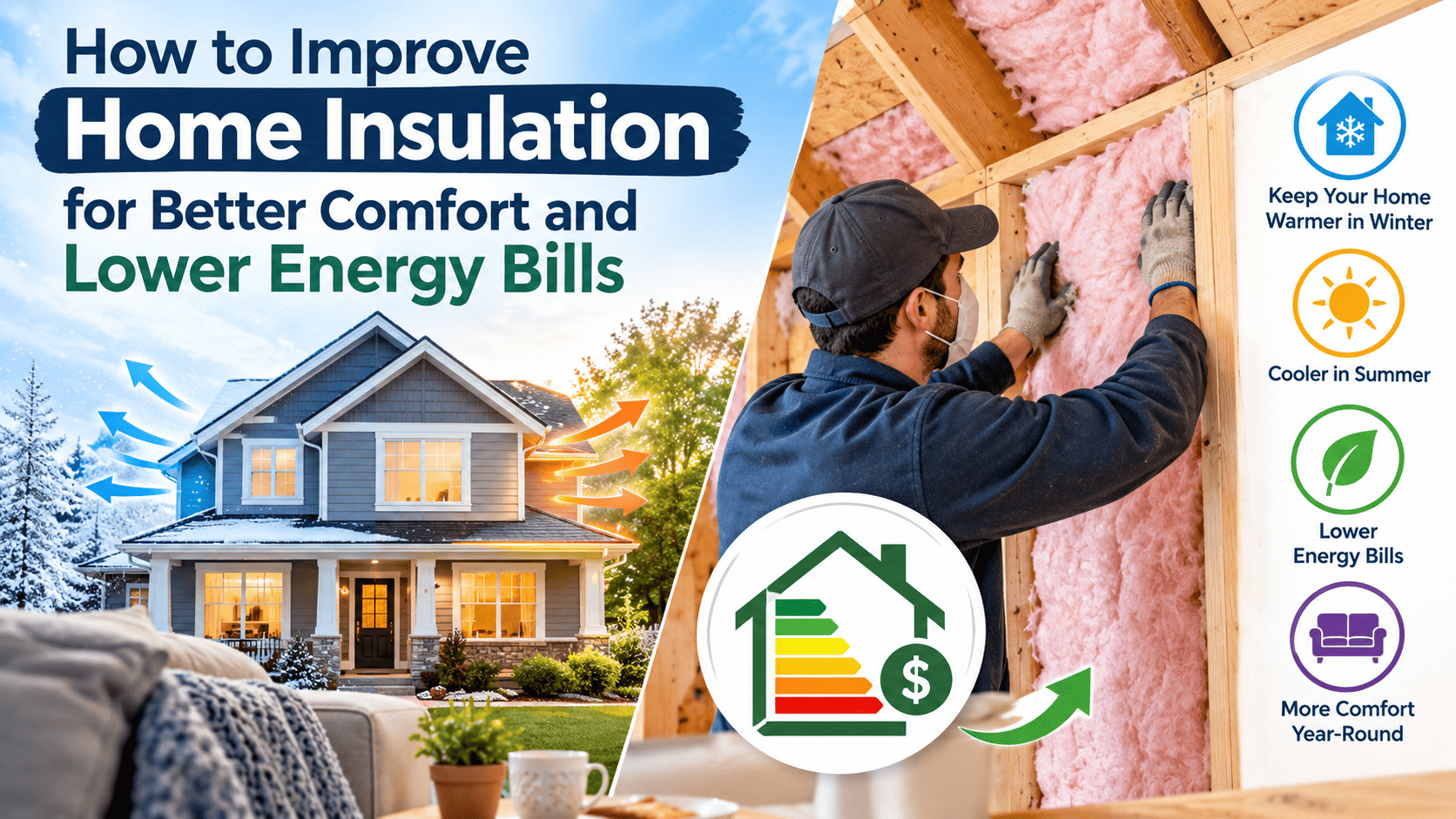
To improve home insulation, start by checking your attic, roof, exterior walls, floors, windows, doors, and other areas where heat can escape. Seal gaps with appropriate caulk or weatherstripping, add insulation where needed, and improve attic coverage if it is insufficient. Choose materials suited to your climate and home structure. Proper insulation, combined with good ventilation and moisture control, can make indoor spaces more comfortable and help reduce heating and cooling costs.
Introduction
A comfortable home depends on more than the temperature displayed on a thermostat. During cold weather, heat can escape through poorly insulated roofs, walls, floors, and gaps around windows and doors. In hot weather, outdoor heat can enter through the same weak points, making indoor spaces uncomfortable and increasing the demand for air conditioning. These problems are particularly noticeable in older properties and homes with inadequate insulation or air leaks.
Improving insulation does not always require a complete renovation. Small improvements, such as sealing drafts around windows or insulating accessible attic spaces, can address common sources of energy loss. Larger projects, including adding wall insulation or upgrading a roof assembly, may provide additional benefits when existing materials are insufficient. The best approach depends on the property’s construction, local climate, moisture conditions, and budget.
Why Home Insulation Matters
Insulation slows the movement of heat between areas with different temperatures. In winter, it helps keep indoor warmth from escaping, while in summer, it slows the transfer of outdoor heat into cooler rooms. Insulation works most effectively when combined with air sealing because insulation alone does not necessarily stop drafts moving through gaps and cracks.
A well-insulated home can maintain more consistent temperatures from room to room. Bedrooms may feel less chilly in winter, upper floors may become more manageable in summer, and heating or cooling equipment may not need to run as frequently to maintain the desired temperature. Actual energy savings vary according to the home’s current condition, climate, energy prices, and the quality of the improvements.
Insulation also influences indoor comfort around exterior walls and ceilings. Even when room air reaches the desired temperature, cold interior surfaces can make a space feel uncomfortable. Improving insulation can help reduce these temperature differences, although proper heating, cooling, and ventilation remain important.
1. Inspect Your Home for Heat Loss
Before buying insulation materials, identify the areas where your home loses or gains the most heat. Begin with the attic or roof space, exterior walls, floors above unheated areas, windows, exterior doors, and places where pipes or cables pass through walls. Look for noticeable drafts, uneven room temperatures, and gaps around building openings.
A simple inspection can reveal obvious problems, but some insulation defects are hidden behind plasterboard, ceilings, or exterior finishes. An infrared thermometer or thermal imaging inspection may help identify unusual temperature patterns, although readings can be affected by weather, sunlight, and other conditions. A professional energy assessment can provide a more complete picture, particularly if you are planning a major renovation.
Pay attention to rooms that remain uncomfortable despite normal heating or cooling. A consistently hot upper floor may indicate roof-related heat gain, insufficient attic insulation, or ventilation problems. A cold room near an exterior wall may have air leaks, inadequate wall insulation, or poorly sealed windows. These signs help guide further inspection but do not prove a single cause on their own.
2. Seal Gaps Around Windows and Doors
Air leaks can undermine insulation by allowing outdoor air to move directly into the house. Common locations include window frames, door edges, letter slots, pipe penetrations, electrical cable openings, and joints between building materials. Sealing these gaps is often a practical first step because it addresses unwanted air movement without requiring extensive construction.
Weatherstripping is useful for movable components such as doors and operable windows. Select a suitable type for the gap size and surface, and ensure that doors and windows can still open, close, and lock properly. Caulk is generally more appropriate for small, stationary cracks around trim and fixed frames. Larger gaps may require a compatible backer material or sealant designed for the specific application.
Avoid sealing openings that serve an essential purpose, such as combustion-air supplies, required ventilation outlets, or drainage paths. Homes with fuel-burning appliances may need professionally assessed ventilation and combustion safety. In bathrooms and kitchens, retain appropriate exhaust ventilation to control moisture and indoor pollutants.
3. Improve Attic and Roof Insulation
The attic or roof is an important area to examine because heat can move through the upper part of a building. In cold climates, insufficient attic insulation can contribute to heat loss. In hot climates, an inadequately insulated roof assembly can allow substantial solar heat to affect rooms below, especially when the roof receives direct sunlight for much of the day.
If your home has an accessible attic, check whether insulation coverage is even and whether there are obvious gaps around the edges. The correct insulation level depends on local climate recommendations and the existing roof construction. Suitable materials may include fiberglass batts, mineral wool, cellulose, or professionally installed foam systems, depending on the application.
Roof insulation must be installed with moisture management in mind. Do not cover roof leaks, damp insulation, or signs of mold without first addressing the underlying cause. In many roof designs, ventilation paths must remain open, while other designs rely on a carefully constructed unvented roof assembly. The correct solution depends on the building system, so avoid blocking existing ventilation openings or changing the roof assembly without understanding its requirements.
4. Add Insulation to Exterior Walls
Exterior walls separate indoor living spaces from outdoor conditions, making them another important part of the building envelope. Homes with little or no wall insulation may experience uncomfortable temperature differences, particularly during extreme weather. Improving wall insulation can help stabilize indoor conditions, but the best method depends on how the walls were constructed.
For unfinished walls or major renovations, insulation may be installed between framing members. Existing homes can sometimes benefit from suitable cavity insulation, but the wall cavity should be assessed before material is added. Moisture exposure, wiring, plumbing, fire safety, and the condition of the exterior finish can affect whether a particular installation method is appropriate.
Exterior insulation is another possible option when a home is undergoing substantial renovation. It can reduce heat transfer through wall framing and may improve overall thermal performance when correctly designed. However, it can affect windows, doors, drainage details, and exterior finishes, so it generally requires careful planning. For occupied homes, a qualified insulation professional can help compare internal, cavity, and external approaches.
5. Upgrade Windows and Reduce Drafts
Windows can contribute to heat transfer because glass generally insulates less effectively than a well-insulated wall. Older or poorly fitted windows may also allow drafts through worn seals and frame joints. Before replacing the entire window, determine whether the main issue is air leakage, damaged seals, single glazing, or insufficient shading.
Low-cost improvements include repairing suitable frame gaps, replacing worn weatherstripping, and using well-fitted insulated curtains or blinds. In appropriate climates, window films or secondary glazing may improve performance, provided the product is compatible with the window and local conditions. External shading can also reduce unwanted solar heat gain during hot weather.
Replacing windows can be beneficial when existing units are damaged or inefficient, but it is usually a larger investment than sealing small leaks. Compare the expected performance improvement with installation costs, frame condition, and climate needs. A properly installed, suitable window is more useful than an expensive unit fitted with gaps around the frame.
6. Insulate Floors and Underfloor Spaces
Floors can be a source of discomfort when they sit above an unheated basement, crawl space, garage, or exposed outdoor area. Cold air entering through floor gaps can make rooms feel chilly, while heat may escape through an inadequately insulated floor assembly. The appropriate treatment depends on whether the home has a suspended timber floor, a concrete slab, or another construction type.
For suitable suspended floors, insulation may be fitted between floor joists. It must be supported securely and protected from moisture where necessary. Gaps around service penetrations and the edges of the floor assembly should also be assessed, because air leakage can reduce the effectiveness of insulation.
Concrete slab floors require a different approach, especially if insulation is being added to an existing building. Options may be more practical during a floor replacement or renovation. Before insulating a crawl space or basement, investigate dampness, drainage, and any existing water intrusion. Trapping moisture against timber or masonry can create problems that outweigh the intended comfort benefits.
7. Choose the Right Insulation Material
Different insulation materials perform differently depending on the installation method, available space, moisture exposure, and building design. Fiberglass is commonly used in wall cavities and attic floors because it is available in batts and loose-fill forms. Mineral wool can offer useful thermal and acoustic properties, while cellulose is often installed as loose-fill material in suitable cavities or attic spaces.
Rigid foam boards can be useful in certain wall, floor, and roof applications where continuous insulation is needed. Spray foam can provide insulation and air sealing in suitable locations, but it requires careful product selection and installation because of chemical exposure, fire-safety, and moisture-management considerations. It is not automatically the best option for every home.
When comparing products, examine their thermal resistance rating, installation requirements, durability, and suitability for your climate. A material with a high advertised rating may perform poorly if it is installed with gaps, compressed unnecessarily, or exposed to moisture. Professional installation can be especially valuable when the work involves concealed cavities or complex building assemblies.
8. Improve Insulation Around Pipes and Ducts
Pipes and heating or cooling ducts can lose energy when they pass through unconditioned spaces such as attics, garages, basements, and crawl spaces. In hot climates, poorly insulated cold-water or air-conditioning lines may also experience condensation if warm, humid air reaches their cool surfaces.
Suitable pipe insulation can reduce unwanted heat transfer and help maintain water temperature. For air-conditioning systems, insulation should be compatible with the pipe and climate conditions, and its outer surface should be properly sealed where necessary to limit moisture entry. Damaged or missing insulation should be repaired rather than simply covered without checking the condition underneath.
Ductwork deserves attention as well. Leaky ducts can lose conditioned air before it reaches the intended room, while poorly insulated ducts may gain or lose heat as air travels through them. Duct sealing and insulation should follow the system manufacturer’s recommendations and applicable safety requirements. If ducts contain old, damaged, or potentially hazardous materials, seek professional advice before disturbing them.
9. Control Moisture and Maintain Ventilation
Better insulation should make a home more comfortable without creating moisture problems. Warm, humid indoor air can condense on cold surfaces inside walls, roofs, and other building components when temperature and moisture conditions are right. Over time, persistent dampness may damage finishes, timber, and insulation, and can encourage mold growth.
Before adding new insulation, repair roof leaks, plumbing leaks, and water entering through exterior walls or foundations. Bathrooms, kitchens, and laundry areas need appropriate ventilation to remove moisture produced by cooking, bathing, and washing. Exhaust fans should discharge outdoors rather than into an attic or enclosed cavity.
Vapor-control requirements differ by climate and building design. A vapor barrier or vapor-retarding layer that is suitable for one climate may cause problems in another if it traps moisture within the assembly. If you are insulating a wall or roof with a history of condensation, consult a qualified building professional who understands local construction practices.
10. Use Window Coverings and External Shade Strategically
Insulation is only one part of keeping indoor temperatures comfortable. Sunlight entering through windows can substantially warm a room, especially during hot afternoons. In warmer climates, external shade from awnings, shutters, or appropriately placed shade structures can reduce direct solar heat gain before it reaches the glass.
Inside the home, insulated curtains or blinds may help reduce heat transfer around windows. Close them when doing so supports your comfort needs, but also consider daylight, ventilation, and indoor humidity. In colder weather, opening suitable window coverings during sunny periods may allow useful solar warmth into a room.
The best strategy depends on window orientation and local weather. West-facing windows often receive strong afternoon sunlight, while south-facing windows in the Northern Hemisphere may receive substantial sunlight during parts of the year. Observe how sunlight moves around your property before investing in permanent shading.
11. Understand Insulation Ratings Before Buying
Insulation products are commonly evaluated using R-value, a measure of resistance to heat flow. In general, a higher R-value means greater resistance to heat transfer for the tested material thickness and conditions. However, the appropriate rating depends on climate, installation location, building codes, and the existing construction.
Product labels may show R-values for a specific thickness or for the complete product. Compare equivalent measurements rather than assuming two products provide the same performance simply because they look similar. For loose-fill materials, installed depth and coverage matter, while batt products need to fit the space without excessive compression or gaps.
Insulation performance also depends on the building as a whole. A highly rated product cannot compensate for major air leaks, wet materials, or poorly designed installation details. Before purchasing supplies, check local building recommendations and determine how much insulation is already present so you can make a suitable upgrade rather than buying material unnecessarily.
12. Plan Home Insulation Improvements Around Your Budget
You do not have to insulate every part of your home at once. Start by addressing obvious drafts, damaged weatherstripping, and accessible areas with insufficient insulation. These improvements may be more affordable than replacing windows or renovating exterior walls, although the potential savings depend on the specific problem and the home’s energy use.
For larger projects, compare the estimated cost of materials and labor with the expected improvement in comfort and energy consumption. Ask contractors to explain which areas they recommend upgrading, what existing problems need repair, and how the work will affect ventilation and moisture control. Request written estimates that clearly describe materials, thicknesses, installation methods, and any preparation work.
If money is limited, prioritize work based on evidence rather than appearance. A professional energy assessment can help identify where the most significant problems occur. You can then complete improvements in stages, beginning with urgent moisture or safety repairs and followed by air sealing and insulation upgrades that suit your property’s needs.
Common Home Insulation Mistakes to Avoid
One common mistake is adding insulation without first checking for water damage. Wet or damp materials may not perform as intended, and covering the source of moisture can make the problem harder to detect. Repair leaks and allow affected areas to dry appropriately before installing replacement materials.
Another mistake is assuming insulation automatically stops drafts. Many fibrous insulation products slow heat transfer but do not form a complete air barrier. Gaps around framing, wiring, plumbing, and access panels may still allow air movement. Air sealing and insulation should therefore be planned together, using suitable materials for each purpose.
Blocking ventilation openings is another risk, particularly in roof and attic spaces designed for ventilation. Likewise, sealing a home too tightly without providing appropriate ventilation can affect indoor air quality and moisture levels. Finally, choosing insulation solely because it is cheap or has a high advertised rating may lead to disappointing results. Correct installation, moisture control, and compatibility with the building are just as important as the product itself.
How to Know Whether Your Insulation Improvements Are Working
After completing insulation improvements, observe how your home performs during different weather conditions. Notice whether rooms maintain more consistent temperatures, whether drafts are less noticeable, and whether heating or cooling equipment can maintain comfortable conditions more easily. These practical observations can help you identify areas that may still need attention.
Energy bills can provide another useful indicator, but comparisons should account for weather, energy prices, occupancy, and changes in how much heating or cooling you use. Comparing similar periods or reviewing energy consumption rather than the bill total alone can provide a clearer picture. Immediate savings are not guaranteed, and some improvements may primarily increase comfort or prevent building damage.
For a more detailed assessment, a qualified energy auditor may use a blower-door test to measure air leakage or thermal imaging to identify possible insulation gaps. These tests can be especially helpful when the source of discomfort is not obvious. Keep records of completed work and any changes in energy use to help guide future improvements.
Conclusion
Learning how to improve home insulation begins with understanding where your property loses heat or gains unwanted warmth. Sealing appropriate air leaks, improving attic and wall insulation, addressing inefficient windows, insulating suitable floors and pipes, and controlling moisture can all contribute to a more comfortable indoor environment.
The most effective improvements depend on your home’s construction, local climate, and budget. Start with a careful inspection, correct moisture problems first, and select materials suited to the location where they will be installed. By prioritizing the areas that need attention and checking the results over time, you can improve indoor comfort and potentially reduce unnecessary energy use without undertaking every upgrade at once.
Frequently Asked Questions
What is the best way to improve home insulation?
The best approach is to identify the home’s main sources of heat loss or heat gain, seal suitable air leaks, and improve insulation in areas where coverage is inadequate. Attics, roofs, exterior walls, windows, and floors above unheated spaces are common places to inspect. The right priorities depend on your climate and building design.
How can I improve home insulation on a limited budget?
Start with affordable improvements such as repairing suitable weatherstripping, sealing small gaps around fixed window and door frames, and addressing obvious insulation gaps in accessible areas. Insulated curtains may also help with window-related discomfort. Avoid spending money on upgrades before checking whether moisture damage or another underlying issue needs attention.
Does better insulation really lower energy bills?
Better insulation can reduce the amount of heating or cooling energy a home needs, especially when existing insulation is inadequate. However, actual savings depend on the home’s condition, climate, energy prices, and heating or cooling equipment. Insulation is most effective when combined with appropriate air sealing and moisture management.
Which part of a house should be insulated first?
There is no single answer for every property. An attic or roof may be a priority in one home, while another may have major air leaks, poorly insulated walls, or problems with floors above unheated spaces. Inspect the building first and prioritize the areas responsible for the greatest problems.
How do I know if my home needs more insulation?
Common signs include rooms that are difficult to keep comfortable, noticeable temperature differences between floors, drafts, and high heating or cooling demand. These symptoms can also result from air leaks, equipment problems, or solar heat gain. A professional energy assessment can help distinguish between these causes.
Can insulation cause mold?
Insulation itself does not automatically cause mold, but incorrect installation or inadequate moisture management can contribute to damp conditions. Roof leaks, plumbing leaks, condensation, and poor ventilation should be addressed before adding insulation. Choose an installation method appropriate for the building’s climate and moisture conditions.