

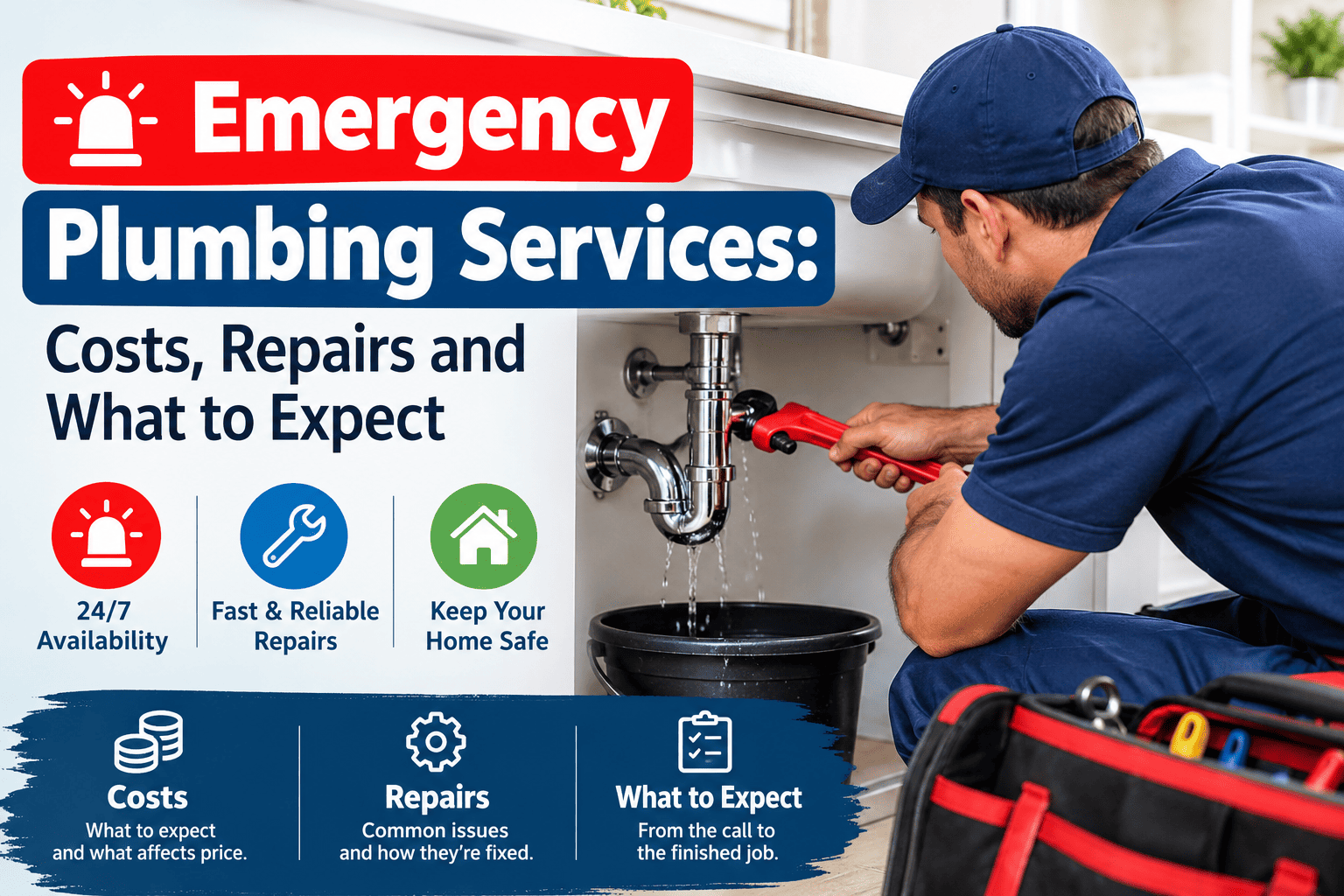
Emergency plumbing services help resolve urgent problems such as burst pipes, serious water leaks, overflowing toilets, blocked drains, and sudden loss of water when immediate action is necessary. The total cost depends on the severity of the problem, time of day, labor charges, replacement parts, and accessibility of the damaged area. Before work begins, ask the plumber to explain the diagnosis, estimated cost, emergency fees, and proposed repair.
Introduction
Plumbing problems rarely happen at a convenient time. A pipe may begin leaking late at night, a toilet may overflow before guests arrive, or a blocked drain may cause wastewater to back up into a property. While some plumbing issues can wait for a scheduled appointment, others require immediate attention to protect the building, prevent water damage, and restore essential facilities. Understanding when to call a professional and what the service involves can help homeowners and tenants make informed decisions under pressure.
Emergency plumbing services are designed to address problems that cannot safely wait until normal business hours. Depending on the situation, a plumber may stop the water supply, locate the source of a leak, clear a blockage, repair a damaged pipe, or restore a failed plumbing fixture. However, emergency service does not always mean that every part of the repair will be completed during the first visit. Some problems require specialist equipment, replacement components, or additional work after the immediate risk has been controlled.
The cost of an emergency call can also differ considerably from the price of an ordinary plumbing appointment. After-hours labor, urgent dispatch, difficult access, and the type of repair can all influence the final bill. By learning how emergency plumbing works, which problems need immediate attention, and what questions to ask before authorizing repairs, you can avoid unnecessary delays and make better decisions when an unexpected plumbing issue occurs.
What Counts as a Plumbing Emergency?
A plumbing emergency is a problem that creates an immediate risk to people, property, sanitation, or access to essential water facilities. A burst supply pipe, an uncontrolled leak near electrical equipment, or sewage backing up into a home generally requires a faster response than a slowly dripping tap. The urgency depends not only on the size of the problem but also on whether the damage is continuing and whether the affected plumbing can be safely isolated.
A leaking tap may waste water without causing immediate structural damage, whereas a leaking pipe inside a wall can gradually soak insulation, damage plaster, and affect nearby rooms. Similarly, a single slow-draining sink may be suitable for a routine appointment, but multiple blocked fixtures or wastewater coming back through a drain may indicate a larger problem. Recognizing these differences helps you decide whether to request immediate assistance or arrange a standard repair.
Common situations that may require emergency attention include burst pipes, major water leaks, overflowing toilets that cannot be controlled, severe drain backups, failed water supply lines, and significant leaks from water heaters. If you smell gas near a gas-fired water heater, leave the affected area and contact the local gas emergency service or emergency responders from a safe location. Do not treat a suspected gas leak as an ordinary plumbing repair.
Common Problems Emergency Plumbers Repair
Burst Pipes and Major Water Leaks
Burst pipes are among the most urgent plumbing problems because water can spread quickly through floors, ceilings, cabinets, and wall cavities. Freezing conditions, corrosion, excessive pressure, damaged joints, and aging pipework can contribute to pipe failures. Even a small split may release a substantial amount of water if the supply remains open. The first priority is usually to stop the flow, followed by locating the damaged section and determining whether a temporary or permanent repair is appropriate.
Depending on the pipe material and extent of the damage, the plumber may replace a short section, repair a joint, or recommend a larger replacement if the surrounding pipework has deteriorated. Hidden leaks may require additional investigation before the full repair can be priced. After the leak is stopped, wet building materials may also need professional drying and assessment to reduce the risk of ongoing moisture damage.
Overflowing Toilets
An overflowing toilet can create a sanitation concern, especially if wastewater spreads onto floors or into neighboring rooms. The cause may be a blockage in the toilet trap, a problem in the branch drain, or an issue farther along the drainage system. If the toilet continues filling, stop using it and shut off its local supply valve if you can safely reach it. Avoid repeatedly flushing because doing so may increase the overflow.
A plumber may use an appropriate auger or other professional drain-clearing equipment to identify and remove the blockage. If several toilets or drains are affected at the same time, the problem may involve a shared drain or main sewer line rather than the individual fixture. Where sewage has escaped, contaminated areas should be handled carefully and cleaned using suitable sanitation procedures.
Blocked Drains and Sewer Backups
Blocked drains can result from grease, soap residue, hair, food waste, foreign objects, accumulated debris, or tree roots entering damaged underground pipes. A single blocked sink may be relatively straightforward to repair, but repeated blockages, foul odors, gurgling fixtures, and water returning through several drains can indicate a more serious drainage problem.
Emergency plumbers may use drain augers, inspection cameras, or suitable high-pressure cleaning equipment, depending on the type and location of the obstruction. The right method depends on the pipe material, the condition of the drainage system, and the nature of the blockage. Simply clearing the visible obstruction may not resolve the underlying cause, so recurring problems should be investigated rather than repeatedly treated as isolated incidents.
Water Heater Leaks and Failures
A leaking water heater can result from a loose connection, a faulty valve, corrosion, or a damaged tank. Some failures involve a replaceable component, while a corroded storage tank may require replacement. The plumber should establish where the water is coming from before recommending a repair, because a leaking connection and a leaking tank can have very different solutions.
If a water heater is leaking heavily, keep people away from the affected area and shut off its water supply only if the control is safely accessible. Do not touch wet electrical equipment or attempt to operate a damaged gas appliance. Follow the manufacturer’s safety instructions and seek qualified assistance. The plumber can assess whether the unit can be repaired safely or whether replacement is more appropriate.
Low Water Pressure and Sudden Loss of Water
A sudden reduction in water pressure may be caused by a leaking pipe, a failed valve, a blocked filter, a faulty pressure regulator, or a wider supply interruption. If only one tap is affected, the issue may be limited to that fixture. If the entire property loses pressure unexpectedly, it is worth checking whether the local water supplier has reported an outage before arranging an emergency visit.
Low pressure becomes more urgent when it occurs alongside unexplained water pooling, damp walls, unusual water-meter activity, or signs of a damaged supply line. A professional can inspect accessible pipework, valves, and pressure-related components to narrow down the cause. Avoid assuming that a new pump or replacement fixture is necessary until the underlying issue has been identified.
How Much Do Emergency Plumbing Services Cost?
The cost of emergency plumbing depends on the work required rather than simply the name of the problem. A plumber who needs to tighten a leaking connection may charge considerably less than one who must locate a concealed pipe leak, remove damaged materials, or repair a blocked underground drain. The same issue can also have different costs depending on the property’s layout, the age of its plumbing, the availability of replacement parts, and the amount of labor involved.
Emergency appointments may include an initial call-out fee, a diagnostic or inspection charge, labor, replacement materials, and additional equipment costs. Some companies include the first portion of labor in their service fee, while others charge separately for inspection and repairs. Evening, weekend, and public-holiday appointments may carry additional charges. Ask the provider to explain which fees apply before agreeing to the visit.
Because plumbing rates differ by country, city, and service provider, a single price range cannot accurately represent every market. For a useful estimate, request a local quote that separates the attendance fee from the expected repair cost. If the plumber discovers a more complicated problem after inspection, ask for an updated estimate and approval before proceeding with non-emergency work.
Typical Emergency Plumbing Cost Breakdown
| Service or charge | What it may include |
| Emergency call-out | Dispatching a plumber to assess the problem |
| Leak detection | Finding the source of visible or concealed water leaks |
| Pipe repair | Labor and materials needed to repair or replace damaged pipework |
| Drain clearing | Removing an obstruction from a sink, toilet, or drain |
| Water heater repair | Diagnosing a fault and replacing suitable components |
| Additional labor | Work that takes longer than the initial allowance |
| Replacement materials | Pipes, connectors, valves, seals, or other required parts |
| Follow-up work | Additional repairs, testing, or specialist services if needed |
This breakdown is a guide to common billing categories, not a fixed price list. Not every job requires every service, and some providers combine several charges into one quote.
Why Emergency Plumbing Bills Can Be Higher
The timing of a call can affect the bill because fewer technicians may be available outside normal business hours. A difficult repair can also require more time, specialist tools, or access through a ceiling, wall, or floor. In addition, older plumbing systems may contain corroded fittings or incompatible materials that complicate the work.
The initial diagnosis matters too. For example, a blocked sink and a blockage affecting several fixtures may look similar at first but require different levels of investigation. A transparent plumber should explain what has been identified, what remains uncertain, and which costs may change if further damage is discovered.
What to Expect When You Call an Emergency Plumber
The process usually begins with a phone call or service request. You may be asked where the problem is located, when it started, whether water is still flowing, and whether other fixtures are affected. These details help the company assess the urgency and decide what equipment or replacement parts the technician may need. Describe the problem as accurately as possible, but do not put yourself at risk to gather additional information.
The provider should explain the expected response arrangements and any applicable call-out fees. Ask whether the quoted arrival time is an estimate, whether the inspection is chargeable, and whether emergency labor rates differ from standard rates. If a company cannot confirm the full repair cost before inspecting the fault, that is understandable; the important point is to establish the charges that can be confirmed in advance.
When the plumber arrives, they will generally inspect the affected fixture or pipework, assess the immediate risk, and identify the likely cause. Depending on the situation, this may involve checking valves, testing water pressure, inspecting visible connections, or using specialist equipment to investigate a concealed leak or blocked drain. A reliable technician should explain the findings in understandable language rather than expecting you to approve work without knowing its purpose.
After the diagnosis, you should receive an explanation of the proposed repair and its estimated cost. For significant work, request an itemized written quote that identifies labor, materials, extra charges, and any work that is excluded. If the problem is actively damaging the property, the plumber may first need to stop the water flow or make the system safe. Permanent repairs can follow once the immediate risk is under control.
Following the repair, the technician should test the affected system as appropriate, check for continuing leaks, and explain whether further work is necessary. Ask whether the repair includes a workmanship guarantee, what its conditions are, and whether replacement parts have separate warranties. Keep the invoice and any written recommendations for future maintenance or insurance records.
What to Do Before the Plumber Arrives
Taking a few sensible precautions can help reduce additional damage while you wait for professional assistance. The right action depends on the type of fault, so avoid attempting a repair if you are unsure how to proceed safely.
First, if water is leaking and the main shut-off valve is safely accessible, turn off the supply. In many properties, this valve is located near the incoming water line or water meter, although the location varies. If the valve is stuck, difficult to reach, or surrounded by water near electrical equipment, do not force it or enter an unsafe area. Contact the appropriate emergency service or qualified professional for guidance.
Second, keep people away from wet electrical equipment, outlets, and appliances. Do not touch electrical switches or devices while standing in water. If you suspect that water has reached electrical wiring, seek qualified assistance rather than trying to inspect the affected area yourself.
Third, move furniture, stored belongings, and other valuables away from the leak only if it is safe to do so. Use containers to catch small amounts of water when practical, but do not attempt to collect water from an unstable ceiling or an area where contamination or electrical hazards may be present. Photograph visible damage from a safe location if you may need documentation for a landlord or insurer.
Finally, tell the plumber what happened, which fixtures are affected, and what steps have already been taken. This information can help the technician prepare for the visit and avoid repeating checks unnecessarily. Do not use chemical drain cleaners or dismantle plumbing components simply because the repair is urgent; unsuitable products and improvised repairs may complicate the eventual fix.
How to Choose a Reliable Emergency Plumbing Service
Choosing a plumber during an urgent situation can feel stressful, but a few checks can help you make a more informed decision. Look for a provider who clearly explains their service area, emergency availability, call-out policy, and pricing structure. Where local licensing, registration, or trade qualifications are required, confirm that the technician meets the applicable requirements.
Reviews can provide useful context, particularly when several customers describe similar experiences with punctuality, communication, and repair quality. However, a high star rating alone does not prove that a plumber is qualified or that every quoted price is fair. Consider how the business responds to complaints and whether its service terms are clear.
Before authorizing work, ask whether the company has experience with your particular problem. A plumber who regularly handles drainage failures may use different equipment from one who specializes in water heaters or concealed leaks. If a job involves gas appliances or electrical systems, make sure the relevant work is handled by appropriately qualified professionals.
Be cautious if a provider refuses to explain basic charges, pressures you into expensive upgrades without a clear reason, or demands that you approve a large repair before providing any meaningful diagnosis. Emergency situations sometimes require immediate decisions, but a professional should still communicate clearly and obtain your authorization for the work wherever practicable.
Emergency Plumbing vs. Routine Plumbing Repairs
The main difference between emergency and routine plumbing is the urgency of the risk. Emergency work focuses on controlling active leaks, restoring essential functions, and preventing further damage. Routine appointments are generally suitable for minor drips, slow drains that are not backing up, planned fixture replacements, and maintenance that can safely wait.
For example, a pipe that is releasing water into a ceiling may require urgent attention because the damage can continue while the supply remains on. A tap that drips occasionally into a sink may usually be scheduled for a standard appointment, provided there are no additional warning signs. A toilet that repeatedly overflows is more urgent than one that has a minor cosmetic defect.
Choosing the correct service level can help avoid unnecessary after-hours charges without delaying a genuinely urgent repair. If you are uncertain, explain the symptoms to a plumbing provider and ask whether the issue requires immediate attendance or can reasonably wait for a normal appointment.
How to Prevent Future Plumbing Emergencies
Preventive maintenance cannot eliminate every plumbing failure, but it can help identify problems before they become expensive emergencies. Inspect visible pipes, flexible supply hoses, taps, and connections periodically for moisture, corrosion, cracks, or unusual changes. Check under sinks and around water-using appliances, where small leaks can remain unnoticed for long periods.
Pay attention to changes in drainage. Repeated blockages, persistent odors, slow-draining fixtures, and gurgling sounds may indicate an underlying problem that deserves investigation. Avoid putting grease, coffee grounds, wipes, or other unsuitable materials into drains. Even products labeled as flushable may contribute to blockages in some plumbing systems.
Know where your main water shut-off valve is located and make sure household members know how to access it safely. If you own the property, arrange maintenance for aging plumbing and follow the manufacturer’s recommendations for water heaters and other equipment. Tenants should report persistent leaks or drainage issues to their landlord or property manager promptly rather than waiting for the problem to worsen.
Finally, consider having a qualified plumber inspect recurring problems instead of repeatedly paying for temporary fixes. A professional assessment may identify deteriorated pipework, faulty valves, excessive pressure, or another underlying cause. Addressing the cause can be more effective over time than treating each incident as an unrelated emergency.
Frequently Asked Questions
1. When should I call an emergency plumber?
Contact an emergency plumber when you have an uncontrolled leak, a burst pipe, an overflowing toilet that cannot be stopped, sewage backing up into the property, or another plumbing failure that creates an immediate risk. If the problem involves electrical hazards or a suspected gas leak, prioritize personal safety and contact the appropriate emergency service.
2. How much do emergency plumbing services cost?
The price depends on your location, the time of the call, the severity of the problem, labor requirements, and replacement materials. After-hours appointments may cost more than routine visits. Request a breakdown of the call-out fee, inspection charges, labor, and estimated repair costs before authorizing the work.
3. Can an emergency plumber repair a burst pipe during the first visit?
Often, yes, if the damage is accessible and the technician has the necessary materials. However, concealed damage, extensive corrosion, difficult access, or unavailable replacement parts may require additional visits. The plumber may first stop the leak and then arrange a permanent repair.
4. Are emergency plumbing services available at night?
Some plumbing companies provide evening, overnight, weekend, and holiday services, while others operate only during limited hours. Confirm availability and response arrangements when calling. Also ask whether after-hours rates or minimum charges apply.
5. Does homeowners insurance cover emergency plumbing repairs?
Coverage depends on your insurance policy, the cause of the damage, and the circumstances of the incident. Some policies cover certain types of sudden water damage but exclude gradual leaks, neglected maintenance, or the failed component itself. Review your policy and contact your insurer before assuming a repair or resulting damage will be covered.
6. What should I ask before hiring an emergency plumber?
Ask about the call-out fee, estimated arrival time, hourly or fixed-rate pricing, parts and labor, applicable qualifications, payment terms, and workmanship warranty. For larger repairs, request a written estimate and clarify which additional charges could apply if the scope of work changes.
Conclusion
Unexpected plumbing failures can disrupt everyday life and cause substantial property damage if they are not addressed promptly. Understanding the difference between an emergency and a routine repair, recognizing common warning signs, and knowing what to expect from a professional can make the situation easier to manage.
When comparing emergency plumbing services, focus on clear pricing, appropriate qualifications, a proper diagnosis, and transparent communication. Ask questions before approving non-emergency work, take reasonable steps to limit damage, and arrange follow-up repairs when necessary. Although emergency plumbing can cost more than a scheduled appointment, responding appropriately to a serious leak or drainage failure may help prevent a much larger problem.
The best approach is to combine a timely response with informed decision-making. A qualified plumber should explain the problem, outline practical repair options, and provide a clear account of the work completed so you can protect your property and make confident maintenance decisions.