

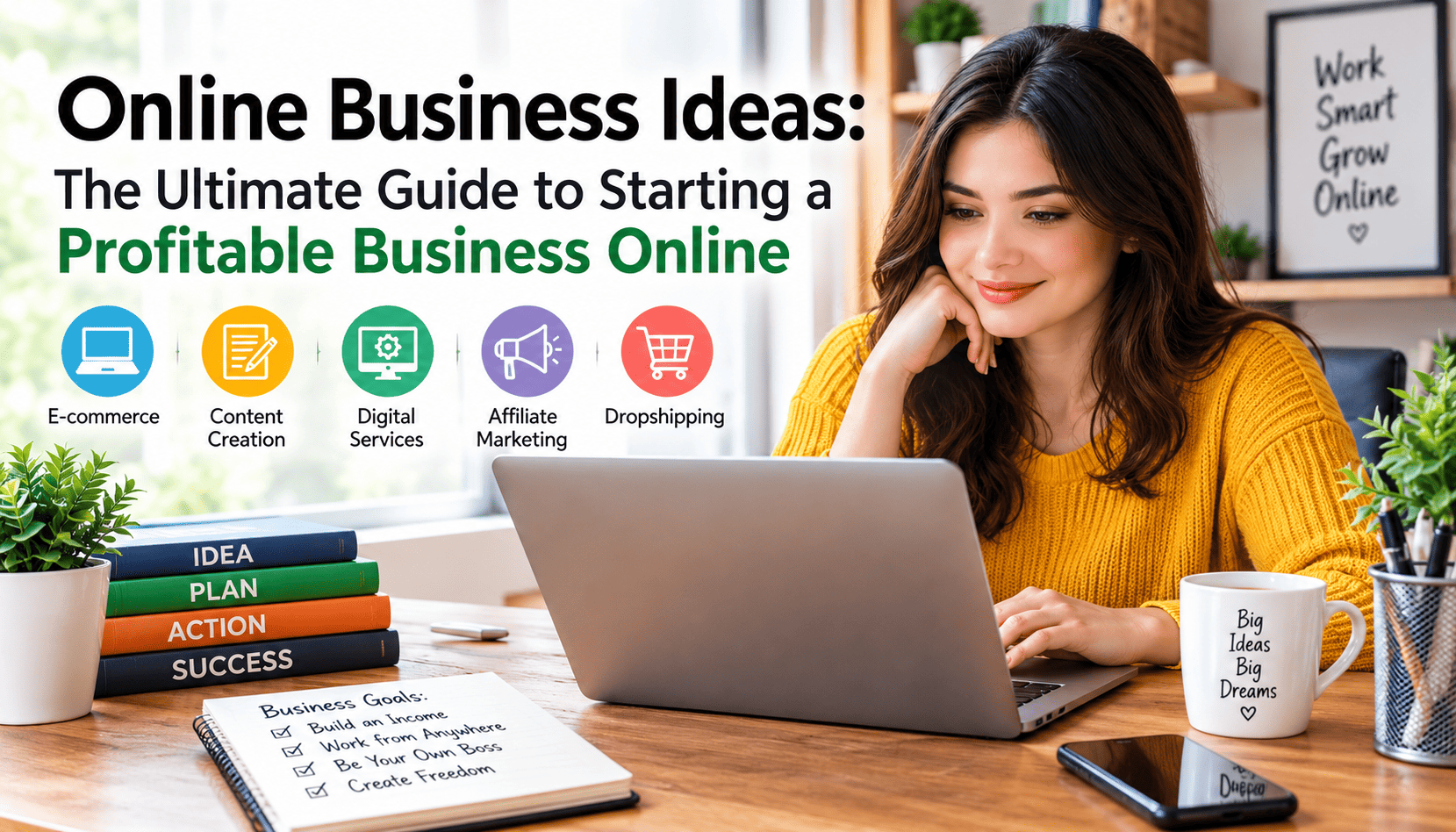
The best online business ideas are those that match your skills, solve a real problem, and can be started with manageable costs. Freelancing, ecommerce, digital products, online tutoring, affiliate marketing, consulting, blogging, and content creation are popular options. The right choice depends on your experience, available time, budget, and long-term goals. Start small, validate your idea, understand your target audience, and gradually build a business that can generate sustainable income online.
Introduction
The internet has changed the way people work, shop, communicate, and build companies. Today, starting a business does not always require a physical store, expensive office, or large team. With a computer, internet connection, useful skills, and a clear business strategy, an individual can create an online business that reaches customers far beyond their local area.
However, having access to the internet does not automatically make an online business successful. The biggest challenge is choosing an idea that has genuine demand and fits your abilities. Some businesses require technical knowledge, while others can be started by people who are good at writing, teaching, designing, selling, organizing, or communicating with customers.
This guide explores some of the most practical online business ideas and explains how each model works, what you may need to get started, and what can help you turn a small online project into a sustainable business.
What Makes a Good Online Business Idea?
A strong online business usually starts with a problem that people are willing to pay to solve. Instead of choosing an idea simply because it appears popular, consider whether there is a specific audience that needs your product or service.
Your skills are another important factor. Someone who enjoys writing may have better opportunities in content creation or blogging, while a person with design experience might succeed with graphic design, branding, or digital products. Similarly, someone with strong communication skills could explore consulting, coaching, tutoring, or customer-focused services.
A good business idea should also have room for growth. You might initially work directly with customers, but over time you could create systems, products, subscriptions, or other income streams that allow the business to serve more people without increasing your workload at the same rate.
1. Freelancing Services
Freelancing remains one of the most accessible ways to start an online business because you can sell skills rather than physical products. Writers, graphic designers, video editors, programmers, virtual assistants, translators, marketers, and other professionals can offer their services to clients around the world.
The key is to avoid presenting yourself as someone who does everything. A focused service can make it easier to communicate your value. For example, instead of simply calling yourself a writer, you could specialize in blog content, product descriptions, technical writing, or business articles.
Building a portfolio is also important. If you do not have previous clients, create a few high-quality sample projects that demonstrate what you can do. As your experience grows, testimonials and repeat customers can become valuable sources of credibility.
2. Start an Ecommerce Business
Ecommerce allows entrepreneurs to sell products through an online store without relying entirely on a traditional physical location. Products can include clothing, accessories, home goods, stationery, beauty products, hobby items, or specialized products for a particular audience.
The most important step is choosing a profitable niche rather than simply listing random products. Research customer needs, competitors, pricing, product quality, and potential demand before investing heavily in inventory.
A successful ecommerce business also depends on more than the product itself. Product photography, descriptions, customer service, website usability, shipping, returns, and marketing all influence whether visitors become customers.
3. Sell Digital Products
Digital products are attractive because they can often be created once and sold repeatedly. Examples include ebooks, templates, printable resources, design assets, educational materials, spreadsheets, and other downloadable products.
The best digital products solve a specific problem. A generic product may struggle to attract attention, while something designed for a clearly defined audience can provide much more value.
For example, instead of creating a general productivity template, you could create a planning system designed for students, freelancers, small businesses, or content creators. The more clearly you understand your audience, the easier it becomes to develop products around their needs.
4. Launch an Online Course
If you have strong knowledge in a particular subject, creating an online course can turn that expertise into a digital business. Courses can cover subjects such as languages, software, business skills, design, photography, marketing, or professional development.
A good course should have a clear learning outcome. Students should understand what they will be able to do after completing the material.
Before spending significant time producing a large course, consider testing the topic with smaller educational content. This can help determine whether people are interested in the subject and which questions they want answered.
5. Start a Blog or Niche Website
Blogging can become a long-term online business when it focuses on a defined audience and consistently provides useful information. A niche website might cover technology, travel, education, personal finance, home improvement, food, hobbies, business, or another specific subject.
Successful blogging requires patience. Publishing articles alone does not guarantee traffic. Content should answer genuine search questions, demonstrate expertise, provide useful information, and offer a better experience than competing pages.
Once a website develops an audience, possible revenue sources may include advertising, affiliate marketing, sponsored content, digital products, memberships, or services.
6. Affiliate Marketing
Affiliate marketing involves promoting products or services and receiving a commission when qualifying purchases or actions occur through your referral.
This model can work particularly well when combined with useful content. For example, a website could publish detailed product comparisons, tutorials, buying guides, or educational articles that naturally recommend relevant products.
Trust is extremely important. Promoting products simply because they offer commissions can damage an audience’s confidence. A better approach is to recommend products that genuinely fit the topic and provide useful information about their advantages and limitations.
7. Online Tutoring
Education is another area with strong opportunities online. If you are knowledgeable about a school subject, language, musical skill, software program, or another teachable topic, you may be able to provide lessons remotely.
Online tutoring can begin with individual sessions and later expand into group classes, recorded lessons, study materials, or educational products.
The most successful tutors usually focus on a particular type of student and learning goal. This makes marketing easier because prospective customers can immediately understand what the service offers.
8. Social Media Management
Many businesses want to maintain an active presence on social platforms but do not have enough time or expertise to create and manage content themselves. This creates opportunities for social media managers.
Services can include content planning, post creation, scheduling, community management, analytics, and strategy development. You can start by working with a small number of clients and develop a portfolio based on measurable improvements.
Understanding the difference between simply posting content and building a strategic social media presence can help you provide more valuable services.
9. Content Creation
Video, podcasts, newsletters, blogs, and social media content have created new ways for individuals to build audiences online. Content creation can become a business when an audience trusts your expertise, entertainment, perspective, or recommendations.
The challenge is consistency. Instead of trying to publish everywhere at once, choose a platform that matches your strengths and audience.
Over time, content creators can diversify revenue through sponsorships, memberships, digital products, services, affiliate partnerships, and other business opportunities.
10. Virtual Assistant Services
Virtual assistants help businesses and professionals handle routine digital tasks. These may include scheduling, email organization, research, data entry, customer communication, document preparation, and administrative support.
This can be an appealing starting point because you do not necessarily need to develop a complicated product. Instead, you provide useful services that save clients time.
As you gain experience, you can specialize in areas such as ecommerce assistance, executive support, social media administration, or customer service and potentially charge more for specialized expertise.
11. Web Design and Development
Businesses of all sizes need websites, landing pages, online stores, and other digital experiences. If you have web development or design skills, this can become a valuable service-based business.
Beginners can start by learning the fundamentals of website structure, responsive design, user experience, and basic development tools. Building sample websites can provide a portfolio before approaching paying customers.
A strong web design business should focus on business outcomes, not just visual appearance. A website should be easy to navigate, useful to visitors, mobile-friendly, and aligned with the client’s goals.
12. Consulting and Coaching
People with professional experience can potentially turn their knowledge into consulting services. Consultants help businesses or individuals solve specific problems using their expertise.
Examples include marketing consulting, business strategy, career guidance, technology consulting, productivity coaching, and specialized professional advice.
Trust is especially important in this model. Your experience, portfolio, case studies, educational content, and communication style can all help demonstrate why someone should choose your service.
How to Choose the Right Online Business
Choosing between different online business models can feel overwhelming. Start by evaluating four things: your skills, budget, available time, and target audience.
If you have a useful skill but little starting capital, a service business such as freelancing or virtual assistance may be a practical starting point. If you enjoy creating products, digital products or ecommerce may be more suitable. If you enjoy teaching, tutoring or online courses could be a better fit.
You should also consider whether you want active or scalable income. Services often require your direct involvement, while digital products and content can potentially reach larger audiences without requiring you to personally handle every transaction.
How to Validate an Online Business Idea
Before investing heavily in an idea, test whether people actually want what you plan to offer. Search for existing businesses in the niche and examine what customers are asking for, what competitors offer, and where customers appear to have problems.
You can also create a simple version of your product or service and gather feedback. This approach is often better than spending months developing something before discovering that there is little demand.
Validation does not require perfect certainty. The goal is to collect enough evidence to make a sensible decision and identify ways to improve the idea before committing significant resources.
How to Start an Online Business With a Small Budget
Starting small can reduce financial risk. You do not necessarily need expensive software, a large inventory, or a complicated website on day one.
Begin with the essential tools required to deliver your product or service. Focus your early resources on quality, customer research, and marketing rather than unnecessary features.
For service businesses, your knowledge and time may be the primary resources. For product businesses, carefully test demand before purchasing large quantities. As revenue grows, reinvest a portion into better tools, marketing, branding, and business systems.
Common Mistakes New Online Entrepreneurs Make
One common mistake is trying to target everyone. A business becomes easier to market when it has a clearly defined customer. Another mistake is constantly changing ideas before giving one enough time to develop.
Ignoring customer feedback is another problem. Your audience can tell you which features they value, what questions remain unanswered, and what improvements could make your offer stronger.
Some beginners also focus too heavily on making money immediately. Sustainable businesses are usually built through useful products, reliable service, customer trust, and consistent improvement.
How to Grow an Online Business
Once you have customers, focus on improving the experience and building repeat business. Satisfied customers can become an important source of referrals and long-term revenue.
You can also document repetitive tasks and create systems. Automation, templates, scheduling tools, customer databases, and organized workflows can reduce unnecessary manual work.
Growth can eventually involve adding new products, entering related niches, hiring freelancers, building partnerships, improving marketing, or creating additional revenue streams. The goal should be controlled growth rather than expanding faster than the business can support.
Online Business Trends to Watch in 2026
The online business environment continues to evolve as technology changes how people discover products, consume content, communicate with companies, and complete purchases. Artificial intelligence, automation, personalized customer experiences, creator-led businesses, digital education, and specialized online services are areas entrepreneurs continue to explore.
However, following every new trend is not necessarily a good strategy. A strong business still needs a real customer problem, useful value, reliable delivery, and a sustainable revenue model.
Technology can help entrepreneurs work faster, but it does not replace the need to understand customers. The businesses most likely to stand out are those that combine efficient technology with genuine expertise and a strong understanding of their audience.
Final Thoughts
The best online business ideas are not necessarily the newest or most complicated ones. A simple business built around a genuine customer need can become more valuable than an exciting idea without a clear market.
Whether you choose freelancing, ecommerce, digital products, blogging, tutoring, consulting, affiliate marketing, or content creation, the fundamentals remain similar. Understand your audience, offer something useful, test your idea, build trust, and improve based on real feedback.
You do not need to build a huge company immediately. Starting with one focused offer and a clearly defined audience can give you the experience and information needed to grow. With patience, consistency, and smart planning, an online business can develop from a small project into a sustainable digital brand.
Frequently Asked Questions
What is the best online business to start?
There is no single best option for everyone. Freelancing, ecommerce, digital products, tutoring, consulting, blogging, and content creation can all work depending on your skills, budget, audience, and goals.
Can I start an online business with little money?
Yes. Service-based businesses such as freelancing, tutoring, consulting, and virtual assistance can often be started with relatively low initial costs. The exact expenses depend on the business model and tools you choose.
Which online business is best for beginners?
Beginners often find service-based businesses easier to understand because they can start by selling an existing skill. Freelancing, virtual assistance, tutoring, and social media services are examples.
How long does it take to make money online?
There is no guaranteed timeline. Results depend on the business model, demand, skills, marketing, competition, consistency, and many other factors. Building a sustainable business usually takes time.
Is blogging still a good online business?
Blogging can still be useful when it provides genuinely valuable information to a specific audience. Successful websites typically combine strong content with good user experience, audience development, and one or more appropriate revenue streams.
What should I do before starting an online business?
Research your target audience, study competitors, identify a specific problem, define your offer, estimate basic costs, and test demand before making a major investment.
How can I make my online business successful?
Focus on solving a real problem better or more conveniently for a specific audience. Deliver consistent quality, listen to customers, build trust, improve your marketing, and develop systems that allow the business to grow sustainably.
[…] to Start a Business With No Money: A Practical Roadmap for First-Time Entrepreneurs Online Business Ideas: The Ultimate Guide to Starting a Profitable Business Online Small Business Enterprise Ideas: From Simple Concepts to Real Businesses Business Ideas […]